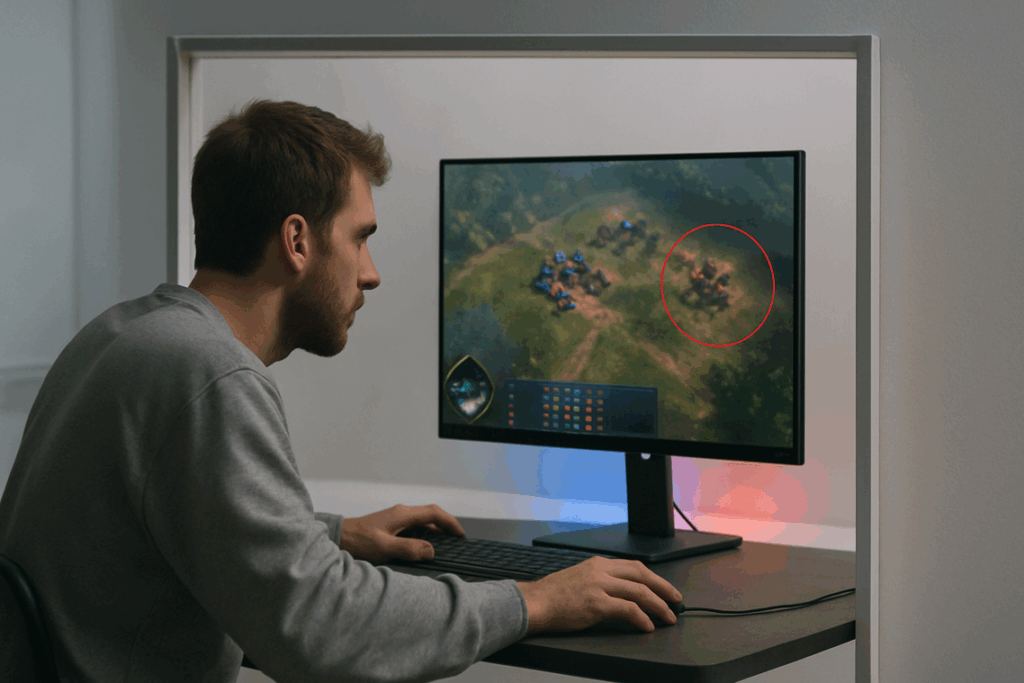
Competitive gaming is evolving at a pace that leaves even seasoned players struggling to keep up. If you’re searching for sharper strategy guides, deeper meta analysis, and practical multiplayer optimization tips, this article is built for you. We break down next-gen gameplay trends, explain how shifting competitive metas impact your role and loadout decisions, and highlight the adjustments top players are making right now.
Success in modern esports isn’t just about mechanics—it’s about adaptability, preparation, and mental resilience in esports. That means understanding patch impacts before they dominate ranked play, refining team coordination strategies, and optimizing performance settings to eliminate avoidable disadvantages.
Our insights are grounded in ongoing competitive analysis, gameplay data review, and close observation of high-level tournament play. Whether you’re climbing ranked ladders or refining team strategies, you’ll find clear, actionable guidance designed to help you stay ahead of the competition—not just react to it.
Ever feel stuck at the same rank, despite hours of aim drills and VOD reviews? That plateau isn’t always about mechanics.
Often, the real bottleneck is neglected cognitive health—how well your brain processes, adapts, and recovers. Deep analysis of pro-level habits shows peak play is holistic: sleep, nutrition, focus, and stress control shape outcomes as much as crosshair placement. It’s not mystical; it’s optimization—systematically removing performance friction.
To break through, build:
- Sharper attention through structured practice
- Stronger mental resilience in esports under pressure
- Physical routines that sustain energy
This framework clarifies what actually moves the needle consistently.
The Player-Machine Interface: Why Your Body Is Your Most Important Peripheral
Think of it this way: your body is the hardware that runs the software of your skill. Lagging hardware will always bottleneck performance. You can install the latest meta strategies, but if the system overheats, everything slows.
Scientifically, fatigue, dehydration, and poor nutrition directly affect reaction time, decision-making speed, and accuracy. Sleep deprivation alone can slow cognitive processing and impair attention, according to the CDC and NIH. In late-game scenarios, that means missed cooldowns, sloppy rotations, and macro decisions that feel like you’re playing through mud (because, neurologically, you kind of are).
Meanwhile, chronic stress elevates cortisol. High cortisol levels interfere with memory consolidation and learning, making it harder to adapt to new patches or shifting metas. It’s like trying to patch a game while the server is on fire.
Your nervous system is the input cable between brain and mouse:
- Neurons transmit electrical signals for movement precision
- Hydration maintains signal efficiency
- Sleep restores synaptic function
- Balanced nutrition fuels neurotransmitter production
Optimize the hardware, and the inputs become faster, cleaner, sharper. That’s the foundation of mental resilience in esports. Even pros can’t outplay biology (not even in a Rocky-style montage). Pro tip: prioritize sleep before tournaments.
Cognitive Conditioning: Drills to Sharpen Your In-Game IQ
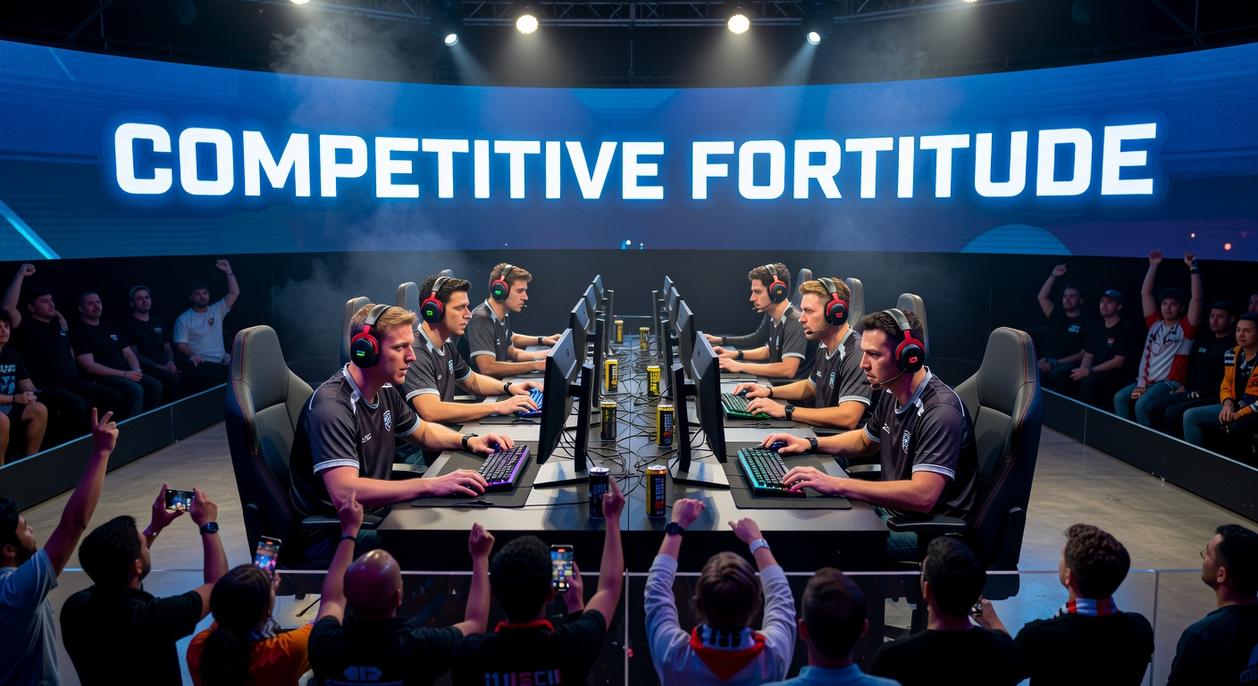
Mechanical skill wins highlights. Cognitive conditioning wins championships. Training the brain outside the game itself means strengthening the mental processes—reaction speed, pattern recognition, decision trees—that drive every clutch moment (yes, even that 1v3 you still think about).
Actionable Drills (Outside the Game)
Use aim trainers like Aim Lab or KovaaK’s to isolate REFLEX and precision under controlled scenarios. These tools provide measurable stats—time-to-target, tracking accuracy—that directly translate to tighter crosshair control. Reaction time tests (such as Human Benchmark) sharpen stimulus-response speed, while memory and pattern-recognition apps improve your ability to read rotations and predict enemy setups.
Pro tip: Track your scores weekly. Improvement compounds when you measure it.
Structured VOD Review
Don’t just rewatch losses to cringe at missed shots. Pause at key moments and ask: Why did I make that choice? What information did I have? This shifts review from mechanical blame to decision analysis. Create a simple checklist: positioning, cooldown tracking, map awareness, risk assessment. Over time, you’ll notice patterns—hesitation on retakes, overcommitting after picks—that you can deliberately correct.
Micro-Drills Between Matches
Long sessions drain focus. Insert 2-minute resets: box breathing (inhale 4, hold 4, exhale 4), quick visual tracking (follow a moving object smoothly), or mental recall of common enemy paths. These maintain clarity and support mental resilience in esports.
The Power of Deliberate Practice
Grinding ranked for hours isn’t practice—it’s repetition. DELIBERATE PRACTICE targets one weakness per session (e.g., minimap checks every 5 seconds). Like a Rocky training montage—but smarter. Focus creates FAST, measurable gains.
Fueling the Engine: A High-Performance Diet and Ergonomics Guide
Let’s retire the “junk food and energy drinks” gamer stereotype. You know the one—cold pizza, neon cans, 3 a.m. queue times, and a headache that hits right before ranked. It’s frustrating because you know you could play better if your body wasn’t sabotaging you.
A high-performance diet doesn’t mean bland chicken and broccoli forever. It means smart fuel:
- Complex carbs (oats, brown rice, sweet potatoes) for steady energy instead of sugar spikes and crashes (Harvard T.H. Chan School of Public Health).
- Lean proteins (eggs, chicken, Greek yogurt) to support neurotransmitter function.
- Healthy fats (avocado, nuts, olive oil) to aid brain health (Mayo Clinic).
Hydration is the underrated MVP. Even mild dehydration can impair attention and increase fatigue (National Academies of Sciences). If you’re grinding for hours, water isn’t optional—it’s a performance multiplier. Pro tip: keep a full bottle on your desk and sip between matches.
Now let’s talk ergonomics—because wrist pain mid-tournament is rage-inducing.
Quick setup checklist:
- Chair height: feet flat, knees at 90°.
- Monitor: eye level, about an arm’s length away.
- Keyboard/mouse: elbows at 90°, wrists neutral.
Poor posture leads to strain injuries and back pain (OSHA). And yes, slouching “just for one game” adds up.
Finally, use structured breaks. The Pomodoro Technique—25 minutes on, 5 minutes off—reduces eye strain and boosts circulation. Stand up. Stretch. Reset mentally.
This isn’t soft advice. It’s foundational to mental resilience in esports. If you care about performance—and about team dynamics how elite squads build winning synergy—your habits off-screen matter as much as your mechanics on-screen.
Mastering the Mental Meta: Your Framework for Tilt-Proof Play
Tilt isn’t just anger; it’s a cognitive cascade where frustration hijacks working memory, narrows attention, and triggers predictable, exploitable mistakes. I’ve slammed keyboards after bad rotations and told myself I was “just unlucky.” In reality, I was telegraphing desperation plays any sharp opponent could farm.
So first, install a Mental Reset. After a tough loss, inhale for four, hold for four, exhale for six. Then stand up, roll your shoulders, and step away from the screen for sixty seconds (yes, even mid-queue). This pattern interrupts the spiral and restores baseline focus.
However, the bigger shift is moving from results-oriented thinking to process-oriented execution. Wins fluctuate; decision quality compounds. Pro tip: set one intention before each match and review one mistake after. Finally, treat pre-game mental warm-ups like aim drills—they prime mental resilience in esports and anchor consistency. Learn from the slip.
Your Blueprint for Sustainable Gaming Excellence
You now hold a toolkit to grow as a holistic competitor, not a button-masher. Plateau? That’s feedback, not failure.
Option A: grind harder.
Option B: integrate cognitive training, physical care, and mental resilience in esports.
• Choose one strategy this week. Commit. Results will speak.
Dominate the Meta and Elevate Your Competitive Edge
You came here to sharpen your competitive advantage and better understand the evolving meta, next-gen gameplay trends, and optimization strategies that separate casual players from consistent winners. Now you have the framework to read the game deeper, adapt faster, and execute smarter.
The reality is this: falling behind the meta, ignoring performance optimization, or neglecting mental resilience in esports is exactly how skilled players plateau. The gap between good and elite isn’t just mechanics — it’s strategy, awareness, and adaptability under pressure.
Start applying what you’ve learned today. Review your gameplay, refine your build paths, optimize your settings, and train your decision-making in high-pressure scenarios. Small strategic upgrades compound into major competitive gains.
If you’re serious about climbing ranks and staying ahead of the curve, dive deeper into advanced strategy breakdowns, real-time meta analysis, and proven multiplayer optimization techniques. Join thousands of competitive players already leveling up their performance — and start winning smarter today.