
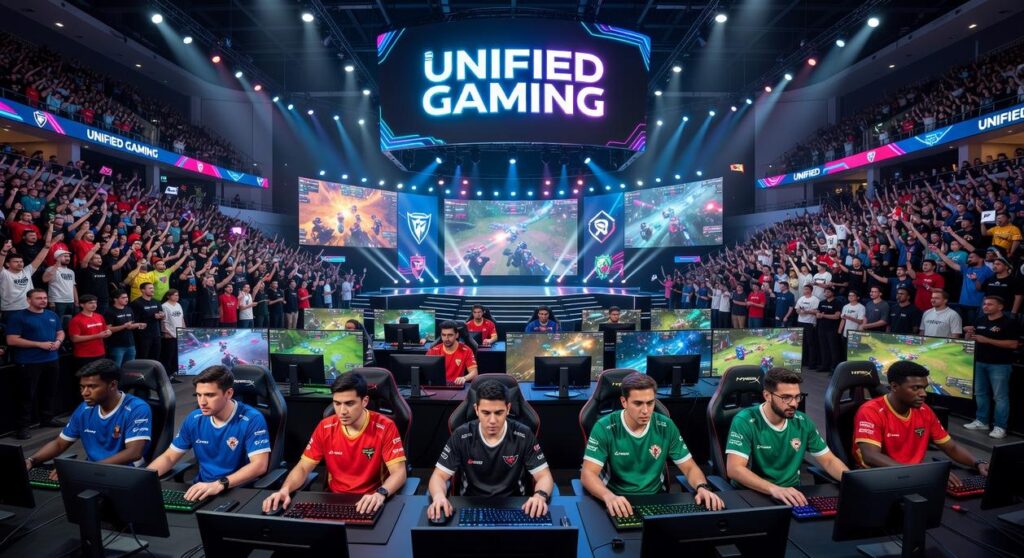
Staying competitive in today’s fast-moving gaming landscape isn’t just about quick reflexes—it’s about understanding the deeper systems shaping how games are played and won. If you’re searching for actionable strategy guides, insight into next-gen gameplay trends, or a sharper read on the current meta, this article is built to give you exactly that. We break down the mechanics, balance updates, and gaming industry shifts that directly impact performance in both ranked and multiplayer environments. The broader evolution of digital gaming can also be seen in online casino environments, with platforms such as Vegas Casino Online reflecting how technology continues to shape the way players access and experience games.
Our analysis draws from high-level match data, patch note breakdowns, and insights gathered from competitive players who test strategies at scale. Instead of recycled tips, you’ll find practical optimization tactics, meta interpretations that actually translate into wins, and forward-looking trends that help you adapt before the competition does.
Whether you’re climbing ranked ladders or refining team coordination, this guide delivers clear, evidence-based insights designed to elevate your gameplay immediately.
Beyond the Hype: How Gaming’s Core DNA is Changing
The pace of change in video games feels relentless, sometimes disorienting (like trying to master a new battle royale overnight).
This piece cuts through the noise to unpack the mechanics driving today’s gaming industry shifts and what they mean for players and developers.
We trace the move from static, single-purchase titles to dynamic, service-driven ecosystems where updates, monetization loops, and live events redefine strategy.
Modern design hinges on systems, not scripts.
Consider these:
- Seasonal battle passes that reward engagement.
- Metas shaped by balance patches.
- Cross-platform progression syncing identity.
The Live Service Metagame: Constant Evolution as a Feature
There was a time when studios would ship a finished game and move on. Today, many titles launch as a platform for content—a living framework designed to expand, rebalance, and reinvent itself over years. Games like Fortnite, Apex Legends, and Warzone don’t simply release; they evolve. Seasons introduce new weapons, limited-time modes, map overhauls, and playable characters, transforming the core experience into something fluid rather than fixed.
This shift dramatically affects the competitive meta (short for “metagame,” meaning the dominant strategies that emerge within a ruleset). Frequent weapon tuning and character reworks can dethrone yesterday’s best loadout overnight. A sniper rifle nerf changes sightline control. A new legend in Apex can redefine team composition strategy. Some players argue this constant change undermines mastery. After all, how can you perfect a strategy that expires every season?
Here’s the counterpoint: adaptation is mastery. Multiplayer optimization now demands pattern recognition, patch analysis, and rapid experimentation. In the era of gaming industry shifts, the best competitors aren’t just mechanically skilled—they’re agile learners.
If you want to stay ahead:
- Track patch notes and test changes immediately (don’t rely on social media summaries).
- Rotate roles and weapons weekly to avoid over-specialization.
- Review high-level gameplay after every major update to identify emerging trends.
Pro tip: Treat each season like a new puzzle, not an interruption. Communities thrive on solving evolving systems, which fuels long-term engagement. The game isn’t just something you play—it’s something you continuously decode.
Smarter, Faster, Stronger: AI’s True Impact on Gameplay
The first time I realized AI had changed gaming wasn’t during a flashy cutscene. It was when an enemy squad flanked me after I repeated the same stealth route three times. They learned. I didn’t. (Humbling, honestly.)
When we talk about AI, most players think of graphics upscaling like DLSS. But gameplay AI—systems that control how non-playable characters (NPCs) behave and adapt—is where the real revolution is happening. Modern NPCs use behavior trees and machine learning models to adjust tactics mid-fight. In games like The Last of Us Part II, enemies call out your last known position and coordinate dynamically (Naughty Dog, 2020). That unpredictability makes encounters feel less scripted and more survival-driven.
Some argue smarter AI just makes games frustrating. Fair point. No one enjoys feeling outmatched by code. But adaptive systems can scale difficulty in real time, creating tension without unfair spikes. That balance reflects broader gaming industry shifts toward immersion over spectacle.
Then there’s procedural generation—AI-assisted systems that build levels, loot tables, and world events algorithmically. Roguelikes like Hades and survival sandboxes like Minecraft use controlled randomness to create near-infinite replayability (Supergiant Games, Mojang). The magic isn’t chaos; it’s guided variation.
Online, machine learning refines matchmaking by analyzing player skill metrics, latency, and behavior patterns. Riot Games has published on automated toxicity detection improving match quality (Riot, 2021). That invisible AI layer directly shapes competitive integrity.
If you’re tracking how live service games are redefining player engagement in 2026, you’ll notice AI quietly orchestrating retention loops and fairer lobbies.
Pro tip: If matches suddenly feel tougher, it may not be “sweaty players”—it could be adaptive MMR recalibrating your true skill ceiling.
The Unified Ecosystem: Cross-Play and Cross-Progression as the New Standard

The wall between PlayStation, Xbox, and PC has largely crumbled. What used to be a marketing bullet point—cross-play (the ability for players on different platforms to play together)—is now an expectation. If a multiplayer title launches without it, players notice (and not quietly).
This is one of the most visible gaming industry shifts of the past decade. But the bigger transformation may be cross-progression: the system that allows your unlocks, rank, battle pass, and purchases to follow you across devices. In simple terms, your progress becomes account-bound, not hardware-bound.
Why does that matter? Because players now invest in ecosystems, not consoles. When your cosmetic skins and competitive rank travel with you, you’re more likely to stick with a single game long term. It’s the Fortnite effect—your identity lives in the account.
Still, I’ll admit there are open questions. Competitive balance isn’t perfectly solved. Mouse-and-keyboard precision versus controller aim assist remains debated, especially in ranked playlists.
Key challenges include:
- Input balancing fairness
- Platform certification hurdles
- Backend account synchronization stability
Even so, the direction is clear. Cross-play is standard. Cross-progression is strategic. And going backward? That seems unlikely.
The New Player Economy: Battle Passes and Ethical Monetization
Not long ago, you bought a game once and that was it. Then came DLC (downloadable content—extra paid expansions), followed by the controversial loot box era, where randomized rewards mimicked slot machines (yes, regulators noticed; see UK Gambling Commission reports). Today, the battle pass model dominates.
A battle pass is a seasonal progression system: play matches, earn XP, unlock tiers of cosmetic rewards. Simple. But psychologically potent. It blends goal-gradient effect (we work harder as we near rewards) with FOMO—fear of missing out, meaning limited-time content disappears when the season ends. Miss it, and it’s gone (cue dramatic Darth Vader “Nooo”).
Critics argue battle passes still pressure players with time-gated grinds. Fair. Not everyone wants a second job disguised as a quest log. But compared to loot boxes’ randomized monetization—widely criticized for predatory mechanics (European Parliament, 2020)—battle passes are at least transparent. You see what you’re buying.
How to Judge a Battle Pass
Before buying, evaluate:
- Time-to-reward ratio (Can you realistically finish it?)
- Cosmetic vs gameplay impact (Pay-to-win is a red flag)
- Rollover currency (Does it fund the next pass?)
Pro tip: If you’re already playing weekly, the pass often pays for itself in value density.
As gaming industry shifts continue toward ethical monetization, expect hybrid models—subscription perks, player trading, maybe even creator-driven rewards. The next question isn’t should you buy a pass—it’s whether your time investment aligns with your playstyle.
Mastering the New Rules of Play
Games are no longer static releases; they’re persistent services that evolve daily. AI systems now reshape difficulty, dialogue, and even level design, while platform walls crumble, letting communities blend. These gaming industry shifts sound exciting, but I admit we don’t fully know where they’ll land.
For players, the challenge is adaptability. If metas shift weekly and monetization models reward engagement over ownership, you must optimize time and performance strategically.
- Track evolving metas
- Question monetization hooks
Understanding these trends is your edge. Stay curious, test builds, anticipate change (yes, when it feels overwhelming) ahead always.
As we explore the top gaming industry shifts that are reshaping competitive titles, it’s also worth checking out “Pblinuxtech Gaming Hacks From Plugboxlinux” for innovative ways to enhance your gaming experience.
Mastering What’s Next in Competitive Play
You came here to understand the latest strategy guides, evolving metas, and multiplayer optimization techniques shaping today’s competitive landscape. Now you have a clearer view of how these systems connect — and how gaming industry shifts directly impact the way you play, compete, and win.
The reality is simple: if you’re not adapting, you’re falling behind. Meta changes, balance patches, and emerging playstyles expose weaknesses fast. Staying stagnant costs rank, rewards, and momentum.
The advantage goes to players who study trends, refine execution, and optimize performance before the competition catches up.
Here’s your next move: analyze your current setup, adjust to the latest meta insights, and start implementing the optimization strategies outlined above today. Thousands of competitive players rely on expert-driven breakdowns to stay ahead — and you should too.
Don’t let outdated tactics hold you back. Level up your strategy now and dominate your next match.
 John Floresincono has opinions about age 9 competitive meta analysis. Informed ones, backed by real experience — but opinions nonetheless, and they doesn't try to disguise them as neutral observation. They thinks a lot of what gets written about Age 9 Competitive Meta Analysis, Clien Strategy Guides and Tactics, Multiplayer Setup Optimization Tips is either too cautious to be useful or too confident to be credible, and they's work tends to sit deliberately in the space between those two failure modes.
Reading John's pieces, you get the sense of someone who has thought about this stuff seriously and arrived at actual conclusions — not just collected a range of perspectives and declined to pick one. That can be uncomfortable when they lands on something you disagree with. It's also why the writing is worth engaging with. John isn't interested in telling people what they want to hear. They is interested in telling them what they actually thinks, with enough reasoning behind it that you can push back if you want to. That kind of intellectual honesty is rarer than it should be.
What John is best at is the moment when a familiar topic reveals something unexpected — when the conventional wisdom turns out to be slightly off, or when a small shift in framing changes everything. They finds those moments consistently, which is why they's work tends to generate real discussion rather than just passive agreement.
John Floresincono has opinions about age 9 competitive meta analysis. Informed ones, backed by real experience — but opinions nonetheless, and they doesn't try to disguise them as neutral observation. They thinks a lot of what gets written about Age 9 Competitive Meta Analysis, Clien Strategy Guides and Tactics, Multiplayer Setup Optimization Tips is either too cautious to be useful or too confident to be credible, and they's work tends to sit deliberately in the space between those two failure modes.
Reading John's pieces, you get the sense of someone who has thought about this stuff seriously and arrived at actual conclusions — not just collected a range of perspectives and declined to pick one. That can be uncomfortable when they lands on something you disagree with. It's also why the writing is worth engaging with. John isn't interested in telling people what they want to hear. They is interested in telling them what they actually thinks, with enough reasoning behind it that you can push back if you want to. That kind of intellectual honesty is rarer than it should be.
What John is best at is the moment when a familiar topic reveals something unexpected — when the conventional wisdom turns out to be slightly off, or when a small shift in framing changes everything. They finds those moments consistently, which is why they's work tends to generate real discussion rather than just passive agreement.