
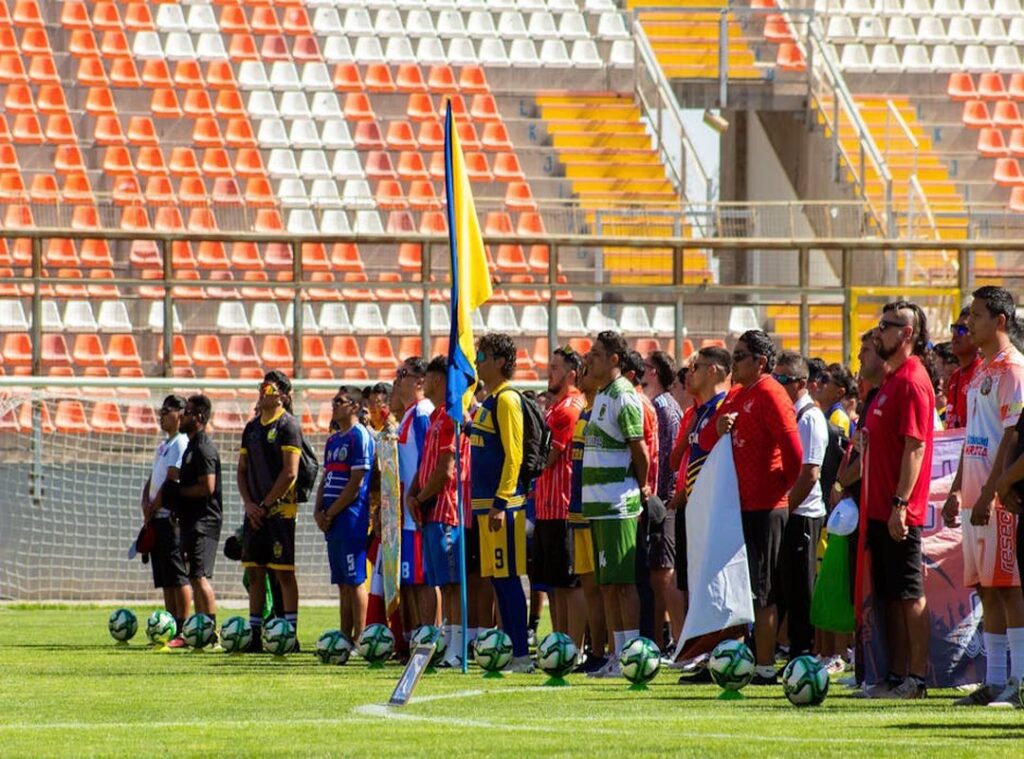
When Iran and Qatar face off on the football pitch, it’s always a high-stakes, intense rivalry. You can feel the tension in the air.
This article will dive into the Iran national football team vs qatar national football team lineups. I’ll break down the projected starting XIs for both teams.
I’ll give you an inside look at the key players, tactical formations, and crucial on-field battles that will likely decide the match. Understanding these lineups is the first step to truly appreciating the strategic depth of the game.
Both teams have been showing strong recent form, adding even more anticipation to this clash. Let’s get into the details.
Team Melli’s Fortress: Iran’s Projected Starting XI
Iran is likely to line up in a 4-2-3-1 formation. This setup focuses on defensive solidity and powerful counter-attacks.
Alireza Beiranvand will be the starting goalkeeper. He’s known for his commanding presence and shot-stopping skills.
The backline will feature Morteza Pouraliganji and Shoja Khalilzadeh as the center-backs. Pouraliganji, the captain, is crucial for organizing the defense. His experience and leadership are key.
At right-back, Ramin Rezaeian will provide both defensive cover and attacking support. On the left, Majid Hosseini will do the same. Both full-backs are essential for maintaining width and balance.
In midfield, Saeid Ezatolahi will be the engine room player. He’s responsible for breaking up play and shielding the backline. Ahmad Nourollahi will be the creative force, linking defense to attack with his vision and passing.
Up front, Mehdi Taremi will lead the line. His aerial prowess and clinical finishing make him a constant threat. Sardar Azmoun will also be a key player, providing pace and movement to stretch defenses.
Alireza Jahanbakhsh and Vahid Amiri will flank the central midfielder. They offer width and creativity, often switching positions to confuse opponents.
This team is strong and physically imposing. Their experience in major tournaments adds to their resilience. They know how to grind out results and capitalize on mistakes.
On the bench, Saman Ghoddos and Ali Gholizadeh could make significant impacts as substitutes. Ghoddos brings versatility and energy, while Gholizadeh offers another dimension with his dribbling and crossing.
Iran national football team vs qatar national football team lineups will showcase this well-structured and tactically disciplined side.
The Maroons’ Masterplan: Qatar’s Projected Starting XI
Qatar’s expected formation is a 5-3-2, which provides defensive stability while allowing for rapid transitions and width from the wing-backs. This setup is a smart choice, especially when compared to the more attacking 4-3-3 that some teams prefer.
The probable starting goalkeeper is Saad Al Sheeb. He’s got the experience and calmness under pressure, which is crucial in high-stakes matches. In front of him, the defensive line consists of Pedro Miguel, Bassam Al-Rawi, and Tarek Salman.
These guys have played together at the club level, so their cohesiveness is a significant advantage.
- Goalkeeper: Saad Al Sheeb
- Defenders: Pedro Miguel, Bassam Al-Rawi, Tarek Salman
In the midfield, Akram Afif stands out as the central playmaker. He’s got the freedom to roam and create chances, making him a key figure in Qatar’s strategy. Alongside him, you’ll likely see Abdulaziz Hatem and Karim Boudiaf, who provide both defensive cover and support in the attack.
- Midfielders: Akram Afif, Abdulaziz Hatem, Karim Boudiaf
Up front, Almoez Ali is the primary goal-scoring threat. His partnership with Mohammed Muntari is a dynamic one. Ali’s speed and finishing ability complement Muntari’s physical presence and hold-up play, making them a formidable duo.
- Forwards: Almoez Ali, Mohammed Muntari
Qatar’s primary strategy relies on quick, incisive passing and exploiting space behind the opponent’s defense. This approach is particularly effective against teams that like to press high up the pitch.
The wing-backs, such as Assim Madibo and Homam Ahmed, are crucial. They provide both defensive cover and attacking outlets down the flanks. Their ability to push forward and deliver crosses adds an extra dimension to Qatar’s play.
Comparing this to the Iran national football team vs Qatar national football team lineups, you can see how each team leverages its strengths. Iran might opt for a more balanced 4-2-3-1, focusing on a strong midfield presence and a lone striker. Qatar, on the other hand, uses the 5-3-2 to build a solid defensive foundation and quick transitions.
Understanding these differences helps in making better decisions, whether you’re a fan or a coach. Knowing the strengths and weaknesses of each formation can give you a clearer picture of how the match might unfold.
Crucial Battles Across the Pitch: Key Player Matchups
When you look at the Iran national football team vs Qatar national football team lineups, a few key battles stand out. Let’s dive into them.
First up, Iran’s main striker against Qatar’s central defenders. This is a big one. If Iran’s forward can outmaneuver and outpace the Qatari defense, it could open up the game for more scoring opportunities.
But if the Qatari backline holds strong, it could stifle Iran’s attack and keep the score low.
Moving to the midfield, Iran’s most tenacious defensive midfielder will face off against Qatar’s primary creative force. Whoever wins this battle will likely control of the tempo. If Iran can disrupt Qatar’s playmaker, they’ll limit their chances.
But if Qatar’s creative player finds space, they could dictate the flow of the game.
On the wings, Iran’s pacy winger will go head-to-head with Qatar’s attacking wing-back. This matchup is crucial. If Iran’s winger can get past the wing-back, it could create overloads and free up space in the middle.
Conversely, if the Qatari wing-back can contain the Iranian winger, it could shut down a major threat.
The strategic battle between the two managers is also key. Each has their preferred style. How they adapt and try to outmaneuver each other will be fascinating.
Will one go for a high-press, or will they sit back and counter? It’s a chess match, and the one who makes the right moves will have the upper hand.
Winning these individual duels is critical. They can swing the momentum and give either team a decisive advantage. For more in-depth analysis, check out Clienage9.
From the Sidelines: Tactical Strengths and Weaknesses
Iran’s key strength is their SET-PIECE DOMINANCE. They can score from corners and free kicks with precision. Defensively, they are well-organized, making it tough for opponents to break through.
However, Iran lacks pace in certain areas, and this can be exploited by quick counter-attacks.
Qatar’s main advantage is their SPEED ON THE COUNTER-ATTACK. They can quickly transition from defense to offense, catching slower teams off guard. Their technical skill also allows them to maintain possession effectively.
But, Qatar is susceptible to physical opponents. Strong, aggressive teams can disrupt their rhythm and force mistakes.
Iran national football team vs qatar national football team lineups will likely this dynamic. Iran will likely to control the midfield and limit Qatar’s counter-attacking opportunities. They’ll use their set-pieces to create scoring chances.
Qatar, on the other hand, will look to stretch the game and exploit Iran’s lack of pace. They’ll aim to draw Iran out and hit them on the break.
In-game substitutions could be crucial. Iran might bring on fresh legs to maintain pressure and prevent Qatar from breaking. Qatar could introduce more physical players to disrupt Iran’s rhythm and protect their lead if they get one.
Understanding these strengths and weaknesses will help you see how each team tries to gain the upper hand.
The Final Whistle: What Will Decide the Outcome?
The starting lineups provide a clear blueprint for each team’s game plan and ambitions. iran national football team vs qatar national football team lineups highlight the strategies both sides are likely to employ.
Reiterating the one or two key matchups that will likely be the most influential in determining the winner is crucial. These pivotal battles on the pitch could tilt the balance in favor of either side.
While formations and player selections are crucial, the execution on match day is what truly matters. How players perform under pressure and adapt to the game’s flow will be decisive.
This tactical chess match between two of Asia’s best promises a compelling spectacle for football fans.
Anticipate the game, having been provided with a comprehensive understanding of what to watch for.
 Michael Reevesanchezons writes the kind of age 9 competitive meta analysis content that people actually send to each other. Not because it's flashy or controversial, but because it's the sort of thing where you read it and immediately think of three people who need to see it. Michael has a talent for identifying the questions that a lot of people have but haven't quite figured out how to articulate yet — and then answering them properly.
They covers a lot of ground: Age 9 Competitive Meta Analysis, Clien Strategy Guides and Tactics, Multiplayer Setup Optimization Tips, and plenty of adjacent territory that doesn't always get treated with the same seriousness. The consistency across all of it is a certain kind of respect for the reader. Michael doesn't assume people are stupid, and they doesn't assume they know everything either. They writes for someone who is genuinely trying to figure something out — because that's usually who's actually reading. That assumption shapes everything from how they structures an explanation to how much background they includes before getting to the point.
Beyond the practical stuff, there's something in Michael's writing that reflects a real investment in the subject — not performed enthusiasm, but the kind of sustained interest that produces insight over time. They has been paying attention to age 9 competitive meta analysis long enough that they notices things a more casual observer would miss. That depth shows up in the work in ways that are hard to fake.
Michael Reevesanchezons writes the kind of age 9 competitive meta analysis content that people actually send to each other. Not because it's flashy or controversial, but because it's the sort of thing where you read it and immediately think of three people who need to see it. Michael has a talent for identifying the questions that a lot of people have but haven't quite figured out how to articulate yet — and then answering them properly.
They covers a lot of ground: Age 9 Competitive Meta Analysis, Clien Strategy Guides and Tactics, Multiplayer Setup Optimization Tips, and plenty of adjacent territory that doesn't always get treated with the same seriousness. The consistency across all of it is a certain kind of respect for the reader. Michael doesn't assume people are stupid, and they doesn't assume they know everything either. They writes for someone who is genuinely trying to figure something out — because that's usually who's actually reading. That assumption shapes everything from how they structures an explanation to how much background they includes before getting to the point.
Beyond the practical stuff, there's something in Michael's writing that reflects a real investment in the subject — not performed enthusiasm, but the kind of sustained interest that produces insight over time. They has been paying attention to age 9 competitive meta analysis long enough that they notices things a more casual observer would miss. That depth shows up in the work in ways that are hard to fake.