
Staying ahead in today’s evolving gaming landscape isn’t just about playing more—it’s about understanding where gameplay, competition, and player expectations are heading next. If you’re searching for deeper insight into strategy guides, next-gen gameplay trends, competitive meta shifts, and multiplayer optimization tips, this article is built specifically for you.
Modern titles evolve rapidly through patches, balance updates, and community-driven game development, making yesterday’s winning strategy obsolete overnight. Players who rely on outdated tactics often fall behind in ranked ladders and organized competition. That’s why we’ve analyzed current meta patterns, emerging mechanics, and high-level multiplayer trends to give you actionable, up-to-date guidance.
Our insights are grounded in competitive analysis, real match data, and ongoing observation of evolving player behavior across major titles. In this guide, you’ll discover what’s shaping the current meta, how to adapt faster than your opponents, and how to optimize your gameplay for consistent, high-level performance.
The Player-Built Future: How Communities Are Forging the Next Generation of Games
As we delve into the power of community-driven content in shaping online worlds, it’s essential to recognize how this grassroots approach mirrors the burgeoning importance of esports, as discussed in our article ‘Why Esports Are Important Hcdesports,’ highlighting the collective engagement that fuels both realms.
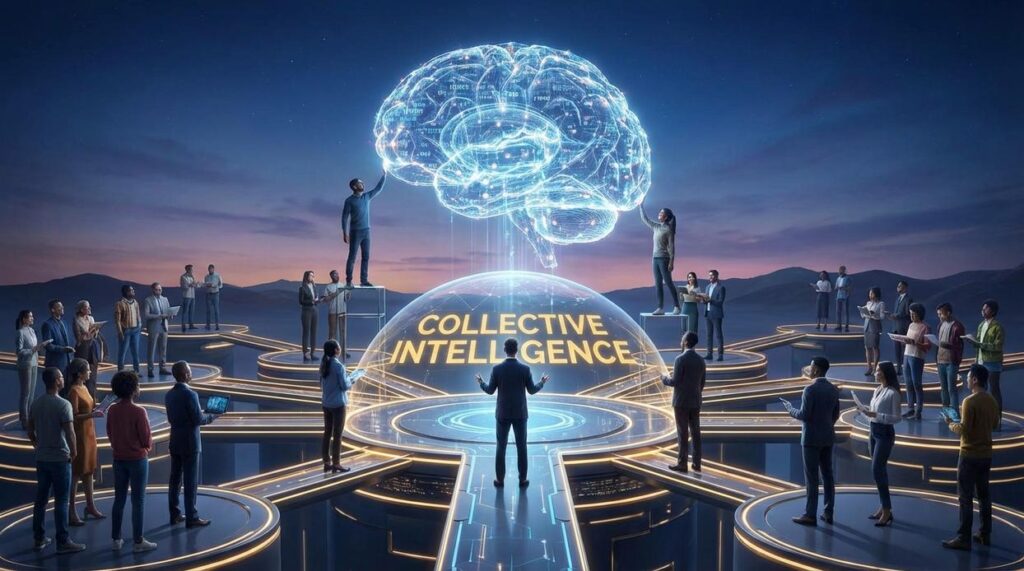
The line between player and creator is dissolving fast. Massive studio projects once dominated, yet many gamers felt sidelined. Now, community-driven game development flips the script. Instead of Studio A controlling every patch, Community B prototypes modes, balances weapons, and stress-tests mechanics in real time.
So what’s the difference? Traditional pipelines move slowly but polish heavily. Community-led ecosystems iterate quickly, trading perfection for momentum (think Minecraft modders reshaping the sandbox).
You’ll learn what this shift means, why it’s a competitive advantage, and how it’s redefining multiplayer metas industry-wide.
Defining the Collaborative Canvas: From Mods to Full-Scale Co-Creation
Not all player involvement is created equal. On one end, you have passive feedback—beta testing, bug reports, balance suggestions. Valuable? Absolutely. But it’s still reactive. Active creation, by contrast, turns players into builders.
Level 1 – Modding Culture. Consider Skyrim or ARMA. Modding—player-made modifications that alter or expand a game—adds new quests, mechanics, and total conversions. As a result, titles released over a decade ago still rank among the most played on Steam (Valve, 2023). The benefit is longevity: developers gain extended sales cycles, while players get near-infinite replayability (basically the director’s cut that never ends).
Level 2 – Open Source Development. Here, source code—the foundational programming of a game—is publicly accessible. Projects like Cataclysm: Dark Days Ahead allow contributors worldwide to refine systems, AI behaviors, and content. Consequently, innovation accelerates because iteration isn’t bottlenecked by a single studio.
Level 3 – Crowdsourced Asset Creation. Finally, some studios integrate fan-made skins, 3D models, or music directly into official builds. Warframe’s TennoGen marketplace shares revenue with creators. That’s community-driven game development in action. Pro tip: revenue-sharing incentives dramatically increase submission quality (Harvard Business Review, 2018).
The Hive Mind Advantage: Strategic Benefits of Community-Led Design

What happens when you compare traditional top-down design vs. community-led design? The difference is like a closed writers’ room versus an open-world sandbox where everyone can mod the rules.
Rapid Meta Evolution
Studio-only balancing: A small internal QA team spots exploits after launch, patches slowly, and often reacts to Reddit threads days later.
Community-powered balancing: Thousands of players stress-test mechanics in real time, flagging broken builds and overpowered combos within hours. This rapid meta evolution creates a healthier competitive loop because imbalance is surfaced early and corrected faster (similar to how open-source software communities patch vulnerabilities quickly, according to research from the Linux Foundation).
Pro tip: Incentivize structured feedback channels, not just forums, to avoid noise drowning out signal.
Optimizing for Fun
A closed team can unintentionally fall into an echo chamber (yes, even brilliant designers binge-playing their own game). In contrast, community-driven game development pulls in diverse playstyles:
- Casual explorers who value narrative pacing
- Competitive grinders chasing optimal builds
- Creative modders stress-testing edge cases
This diversity pressure-tests gameplay loops before they calcify into stale mechanics. Think of it as playtesting on “hard mode.”
Built-in Marketing & Investment
Developers can buy ads. Communities create movements. Players who contribute feel ownership, and ownership fuels advocacy. Word-of-mouth marketing drives 20–50% of purchasing decisions across industries (Nielsen), and invested players become your loudest champions.
Sustainable Content Pipeline
Studio-only content pipelines are finite. Community-augmented pipelines are renewable. User-generated quests, skins, and modes extend lifespan and retention (just look at Minecraft or Fortnite Creative). One model burns out teams; the other scales with its audience. The hive mind, when guided well, becomes a strategic advantage.
Titans of the Crowd: Landmark Games Forged by Player Input
Case Study 1 – Dwarf Fortress
Few titles embody community-driven game development like Dwarf Fortress. Launched in 2006, its ASCII graphics hide a staggeringly COMPLEX simulation: geology, ecology, personality traits, even procedurally generated histories. Players didn’t just report bugs—they shared sprawling fortress sagas that exposed edge cases in AI behavior and world logic. Over decades, Tarn Adams incorporated forum feedback to refine systems like mood mechanics and siege balance. Critics argue the game’s opacity limits mass appeal. True—but that depth is precisely why its loyal base keeps stress-testing mechanics most studios would never dare ship. (PRO TIP: Read patch notes—they often preview systemic overhauls.)
Case Study 2 – Minecraft (Early Access)
When Minecraft entered alpha in 2009, it was a minimalist sandbox. Through public builds and direct player suggestions, features like Redstone circuitry and survival mode evolved. Early adopters essentially functioned as live QA and ideation teams. Some say this open model risks feature creep. Yet Mojang’s iterative updates transformed a block builder into a GLOBAL PLATFORM for creativity and modding.
Case Study 3 – Counter-Strike
Born as a 1999 Half-Life mod, Counter-Strike thrived on competitive balancing shaped by relentless community playtesting. Weapon recoil patterns, map flow, and economy systems were tuned through thousands of matches before Valve acquired it. Its rise mirrors broader top gaming industry shifts that are influencing competitive titles: players don’t just play—they OPTIMIZE.
Navigating the Open World
An open-world project is like a sprawling city park: beautiful, alive, but chaotic without paths. For players, contributing starts small. Think of it as planting one tree, not redesigning the skyline overnight.
- Share HIGH-QUALITY feedback after patches.
- Learn basic modding tools for a favorite game.
- Join a Discord server and ask where help is needed.
These steps turn spectators into collaborators in community-driven game development, much like extras becoming co-writers on a blockbuster.
Developers face a different puzzle. Too many ideas can feel like tossing every spice into one stew (yes, even the weird ones). Without a clear artistic vision, cohesion crumbles. Strong moderation, firm guidelines, and transparent roadmaps act as the city’s zoning laws.
Some argue open collaboration kills control. But with clear IP policies defining ownership, the sandbox stays fun—and lawsuits stay off the map. Balance is the secret sauce here. For everyone involved.
Your turn to build is not a side quest; it’s the new main storyline. community-driven game development has evolved from niche mod scenes into a strategic force reshaping how titles launch, patch, and endure. The most resilient games operate as conversations, not monologues; developers ship, players respond, updates adapt. Some argue this dilutes vision, but history suggests collaboration strengthens longevity. This feedback loop is the real endgame. My speculation: future blockbusters will launch with mod kits and public roadmaps by default.
- Look for active Discords and forums.
- Make one small contribution.
Don’t just play; join the meta-shaping process next today.
Level Up Your Competitive Edge Today
You came here to understand how next-gen gameplay trends, competitive meta shifts, and smarter multiplayer optimization can give you a real advantage. Now you have the clarity to adapt faster, build stronger strategies, and stay ahead in an environment that punishes hesitation.
The reality is simple: if you’re not actively refining your approach, someone else in your lobby is. The meta evolves. Mechanics change. community-driven game development continues to reshape how titles are balanced and expanded. Falling behind means losing your edge.
So take action. Apply the strategies outlined above, review your current builds, optimize your team coordination, and track emerging trends before they go mainstream. Don’t just play—analyze, adjust, and dominate.
If you’re serious about climbing ranks and mastering the competitive landscape, start using proven strategy breakdowns and data-backed meta insights trusted by thousands of competitive players. Dive into the latest guides now and turn every match into a calculated win.
 John Floresincono has opinions about age 9 competitive meta analysis. Informed ones, backed by real experience — but opinions nonetheless, and they doesn't try to disguise them as neutral observation. They thinks a lot of what gets written about Age 9 Competitive Meta Analysis, Clien Strategy Guides and Tactics, Multiplayer Setup Optimization Tips is either too cautious to be useful or too confident to be credible, and they's work tends to sit deliberately in the space between those two failure modes.
Reading John's pieces, you get the sense of someone who has thought about this stuff seriously and arrived at actual conclusions — not just collected a range of perspectives and declined to pick one. That can be uncomfortable when they lands on something you disagree with. It's also why the writing is worth engaging with. John isn't interested in telling people what they want to hear. They is interested in telling them what they actually thinks, with enough reasoning behind it that you can push back if you want to. That kind of intellectual honesty is rarer than it should be.
What John is best at is the moment when a familiar topic reveals something unexpected — when the conventional wisdom turns out to be slightly off, or when a small shift in framing changes everything. They finds those moments consistently, which is why they's work tends to generate real discussion rather than just passive agreement.
John Floresincono has opinions about age 9 competitive meta analysis. Informed ones, backed by real experience — but opinions nonetheless, and they doesn't try to disguise them as neutral observation. They thinks a lot of what gets written about Age 9 Competitive Meta Analysis, Clien Strategy Guides and Tactics, Multiplayer Setup Optimization Tips is either too cautious to be useful or too confident to be credible, and they's work tends to sit deliberately in the space between those two failure modes.
Reading John's pieces, you get the sense of someone who has thought about this stuff seriously and arrived at actual conclusions — not just collected a range of perspectives and declined to pick one. That can be uncomfortable when they lands on something you disagree with. It's also why the writing is worth engaging with. John isn't interested in telling people what they want to hear. They is interested in telling them what they actually thinks, with enough reasoning behind it that you can push back if you want to. That kind of intellectual honesty is rarer than it should be.
What John is best at is the moment when a familiar topic reveals something unexpected — when the conventional wisdom turns out to be slightly off, or when a small shift in framing changes everything. They finds those moments consistently, which is why they's work tends to generate real discussion rather than just passive agreement.