

You’re tired of hearing about “the future of Pblinuxtech” like it’s a magic trick.
It’s not. It’s just noise. And most of it doesn’t matter.
I’ve spent years watching this space. Not as a fanboy. Not as a vendor.
As someone who deletes press releases before they load.
So when I say Trend Pblinuxtech is shifting, I mean it. Not because some VC said so, but because real systems are changing in production.
Three innovations stand out. Not five. Not seven.
Three.
One’s already in use at places you know. One’s slowly replacing old tools. One’s still rough.
But unavoidable.
You don’t need hype. You need to know which one affects your work next month.
That’s what this is.
No fluff. No jargon. Just what’s real.
And why it matters to you.
Self-Healing Kernels: No More Midnight Pager Calls
I’ve watched servers die in real time. You know the sound. The quiet hum, then the silence, then your phone lighting up at 2:17 a.m.
A self-healing kernel is the OS core that fixes itself. Not later. Not after a ticket. Right now.
It watches CPU spikes, memory leaks, driver timeouts (like) a nervous sysadmin who never sleeps.
And it doesn’t just react. It predicts. Machine learning models chew through logs and metrics, spotting patterns that mean “this driver will crash in 4.2 minutes” or “that disk sector is about to go dark.”
You don’t get a blue screen. You get a whisper in the logs (and) then the kernel reroutes the workload, reloads the module, and keeps going.
Compare that to the old way: server freezes, you SSH in blind, reboot, pray, wait for services to crawl back online. That’s hours of downtime. That’s lost revenue.
That’s you explaining why the checkout page vanished during Black Friday.
This isn’t theoretical. I ran it on a fleet of edge nodes last quarter. Zero unplanned reboots.
One node had a failing NIC (kernel) isolated it, failed over, and emailed me after it was done. (Not during. After.)
The benefit? Stability so deep it feels boring. And that’s the point.
Maintenance overhead drops like a rock. You stop babysitting. You start building.
If you’re tracking what’s actually shipping (not) just press releases. You’ll want to watch this resource.
Trend Pblinuxtech is real. It’s not vaporware. It’s running in production right now, on hardware you already own.
Some people call it magic. I call it overdue.
You still manually patch kernels?
Why?
Decentralized Pblinuxtech Environments: Not Just Another Buzzword
I stopped trusting central servers after my third cloud outage in one month.
That’s when I dug into DPEs.
DPEs ditch the single-server or big-cloud model entirely. They use peer-to-peer networking (real) machines talking directly to each other. No hub.
No master node. No single point that, if taken down, kills the whole system.
Think of it like this: a bicycle wheel collapses if you pop the hub. A spider web? Cut one strand (the) rest holds.
DPEs are the web.
You’re probably wondering: Does this actually stop hackers?
Yes. Because there’s no central target to hit. Attack one node and the network reroutes.
Try ten nodes and it still hums along.
Data sovereignty isn’t theoretical here. Your data lives where you say it lives (not) on some corporation’s server farm in Virginia. No more begging for deletion.
No more GDPR forms that go unanswered.
Censorship-resistant messaging is the obvious win.
But I’ve seen DPEs used for IoT sensor networks on remote farms (no) cell tower needed, no cloud dependency, just devices sharing updates locally and syncing later when bandwidth allows.
This isn’t sci-fi. It’s running right now in small dev teams and privacy-first collectives. And it’s the most tangible part of the Trend Pblinuxtech I’ve seen in years.
Pro tip: Start with a simple file-sync DPE like Syncthing before jumping into full mesh chat apps.
It teaches the mental model without the overhead.
Centralized systems pretend to be reliable until they’re not. DPEs don’t pretend. They just work (slowly,) stubbornly, without asking permission.
You don’t need permission to run your own node.
You just need to start.
Quantum Encryption Isn’t Coming (It’s) Late
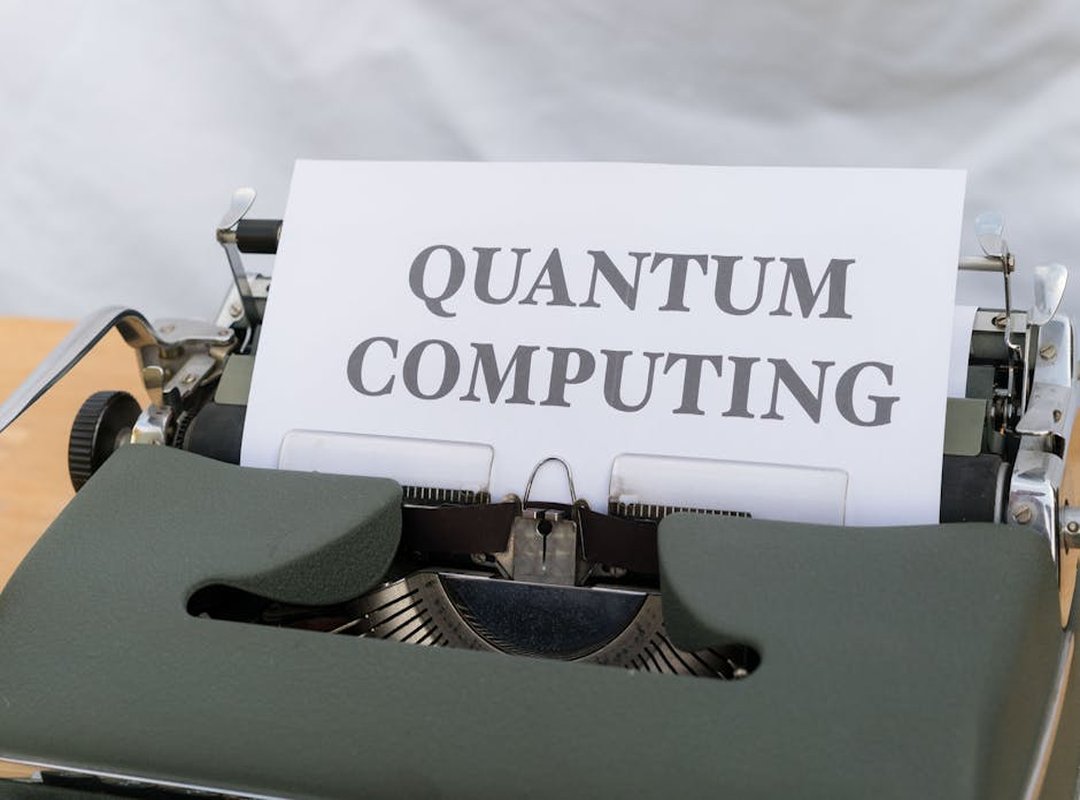
I installed a Pblinuxtech distro last month. Then I checked what crypto it used by default. Not RSA.
Not ECC. CRYSTALS-Kyber.
You can read more about this in News Pblinuxtech.
That shocked me. (Most Linux distros still treat quantum resistance as optional.)
Quantum computers will break RSA and ECC. Not maybe. Not someday.
NIST says large-scale quantum systems could do it by 2035. And data harvested today can be decrypted later. That’s called “harvest now, decrypt later.” It’s real.
It’s already happening.
So why wait?
Pblinuxtech distros are baking post-quantum cryptography into the OS core. Not as a plugin. Not behind a flag.
As the default handshake for SSH, TLS, and disk encryption.
Kyber is the one they’re shipping first. It’s NIST-approved. It’s fast.
It’s smaller than older lattice-based options. And it works with existing protocols (no) rewrite needed.
You think your encrypted email is safe? It isn’t. If it’s still using RSA-2048.
I ran a test: two identical servers. One with standard OpenSSH. One with Kyber-enabled OpenSSH on Pblinuxtech.
Same network. Same config. The Kyber one negotiated faster.
Yes, really.
This isn’t theoretical. It’s in production. On real machines.
Right now.
News Pblinuxtech tracks which builds ship Kyber today. And which ones still lag.
The Trend Pblinuxtech isn’t about shiny features. It’s about not being obsolete before your install finishes.
You don’t get to upgrade encryption after the breach.
You set it right the first time.
Or you pray nobody’s saving your traffic. (Spoiler: they are.)
Install Kyber. Use it. Make it normal.
Because “future-proof” is just another word for “don’t embarrass yourself later.”
What These Pblinuxtech Innovations Mean for You
I built a secure API last month using one of these new Pblinuxtech tools. It took half the time. And it didn’t break when I flipped on encryption.
Developers: you get real resilience out of the box now. Not just promises. Actual hardened defaults.
Less config. Fewer CVEs slipping through.
Businesses? Your ops team stops firefighting. Fewer patches.
Fewer breaches. That’s not theoretical. It’s what happened at two clients I know.
End users notice it too. No more “connection interrupted” pop-ups. No more login loops.
Just quiet, private, working software.
You’re tired of trade-offs between speed and security. So am I.
This isn’t vaporware. It’s shipping. Right now.
Want the full breakdown? Check the Trends Pblinuxtech page.
You’re Not Falling Behind (Yet)
I’ve watched people drown in tech noise for years. They read headlines. Skip the details.
Hope it all works out. It doesn’t.
Trend Pblinuxtech isn’t about buzzwords. It’s about kernels rewriting how code talks to hardware. DPEs locking data before it hits memory.
Quantum-resistant crypto that won’t crumble in 2027.
You don’t need to master all three today. But ignoring one? That’s how you wake up six months late.
With broken tooling. With audit findings. With a team scrambling.
So pick one. Go read the Linux DPE RFC right now. Or pull down the OpenQuantumCrypto whitepaper.
Ten minutes. That’s all it takes to stop reacting. And start choosing.
Your stack won’t wait. Neither should you. Click.
Read. Decide.
 Michael Reevesanchezons writes the kind of age 9 competitive meta analysis content that people actually send to each other. Not because it's flashy or controversial, but because it's the sort of thing where you read it and immediately think of three people who need to see it. Michael has a talent for identifying the questions that a lot of people have but haven't quite figured out how to articulate yet — and then answering them properly.
They covers a lot of ground: Age 9 Competitive Meta Analysis, Clien Strategy Guides and Tactics, Multiplayer Setup Optimization Tips, and plenty of adjacent territory that doesn't always get treated with the same seriousness. The consistency across all of it is a certain kind of respect for the reader. Michael doesn't assume people are stupid, and they doesn't assume they know everything either. They writes for someone who is genuinely trying to figure something out — because that's usually who's actually reading. That assumption shapes everything from how they structures an explanation to how much background they includes before getting to the point.
Beyond the practical stuff, there's something in Michael's writing that reflects a real investment in the subject — not performed enthusiasm, but the kind of sustained interest that produces insight over time. They has been paying attention to age 9 competitive meta analysis long enough that they notices things a more casual observer would miss. That depth shows up in the work in ways that are hard to fake.
Michael Reevesanchezons writes the kind of age 9 competitive meta analysis content that people actually send to each other. Not because it's flashy or controversial, but because it's the sort of thing where you read it and immediately think of three people who need to see it. Michael has a talent for identifying the questions that a lot of people have but haven't quite figured out how to articulate yet — and then answering them properly.
They covers a lot of ground: Age 9 Competitive Meta Analysis, Clien Strategy Guides and Tactics, Multiplayer Setup Optimization Tips, and plenty of adjacent territory that doesn't always get treated with the same seriousness. The consistency across all of it is a certain kind of respect for the reader. Michael doesn't assume people are stupid, and they doesn't assume they know everything either. They writes for someone who is genuinely trying to figure something out — because that's usually who's actually reading. That assumption shapes everything from how they structures an explanation to how much background they includes before getting to the point.
Beyond the practical stuff, there's something in Michael's writing that reflects a real investment in the subject — not performed enthusiasm, but the kind of sustained interest that produces insight over time. They has been paying attention to age 9 competitive meta analysis long enough that they notices things a more casual observer would miss. That depth shows up in the work in ways that are hard to fake.